News
News
Published on
2021 Aug 12Thematic Areas
Climate Change and BiodiversityPublication of the first part of the sixth IPCC report
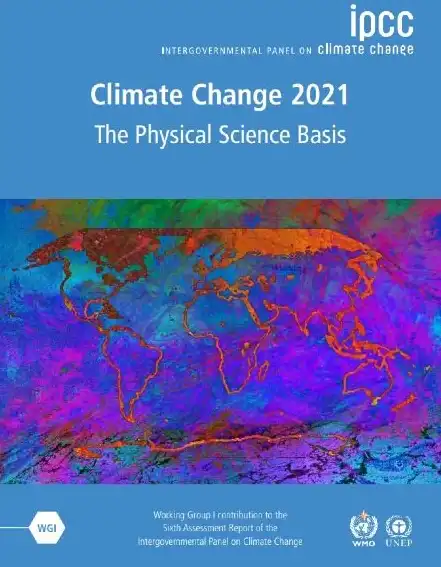
On Monday 9 August, the IPCC published the first part of its sixth report, devoted to the most recent scientific evidence concerning climate change.
“Human influence has warmed the climate to a level unprecedented in at least 2,000 years”, alert its members in the sixth summary for decision-makers (available in English).
They recall that the global temperature on the Earth's surface was 1.09°C warmer between 2011 and 2020 than it was between 1850 and 1900, with a greater increase at land level (1.59°C) than at ocean level (0.88°C).
For example, between 1901 and 2018, sea levels rose by 20 centimeters, faster than in any other century in at least 3,000 years.
In the north, between 2011 and 2020, the average extent of sea ice in the Arctic reached its lowest level since 1850. The melting of the glaciers, on the other hand, has caused their surface to retreat unprecedented in 2000 years.
Concerning the concentration of CO² in the atmosphere, it is the highest in at least 2 million years.
While the world's ability to limit global warming to +1.5°C compared to the pre-industrial era (the ideal objective of the Paris Agreement) will be at the center of discussions at COP26, the IPCC is adapting its scenarios upward compared to its previous publication. This new report includes a wider range of greenhouse gas emission trajectories. Two of them study the effects of a greater increase in emissions than previously, while the interim scenario focuses on maintaining current emissions until 2050 before a decrease. The temperature could then increase from 2.1°C to 3.5°C by the end of the century, and from 3.3°C to 5.7°C according to the worst trajectories, compared to the period 1850-1900.
New models and new analyses and methods are providing a better understanding of human influence on a wider range of climate variables. According to the report, it is thus “probable” that human influence has contributed to the current pattern of precipitation, “extremely likely” that it has induced the observed changes in the salinity of ocean waters near the surface”, “very likely” that human activity is also responsible for the retreat of glaciers since the 1990s, the melting of sea ice in the Arctic or even “extremely likely” that humans are the main cause of global warming. top layer of the oceans.
While the greenhouse gas emissions that cause climate change are still on the rise, the panel of experts describes the future consequences. Heat waves, floods, droughts, weather conducive to fires. All regions will experience more impacts from climate change and some will even be irreversible for centuries or even millennia, in particular with regard to ocean temperatures, the melting of glaciers or even the rise in sea level.
“Some extreme heat over the past decade would have been extremely unlikely without the influence of human activity on the climate system. Each additional 0.5°C causes, in a very visible way, an intensification and an increase in the frequency of extreme heat [...], heavy rains as well as droughts”, notes the report.
The IPCC insists that warming to 1.5°C and 2°C will be exceeded during the 21st century, unless there is a profound drop in CO2 emissions and other greenhouse gases in the coming decades.
As a solution, the report insists on achieving carbon neutrality, i.e. achieving a balance between anthropogenic emissions and CO² removals. With regard to the carbon budget (an estimate of the quantity of CO² that humanity can still emit before exceeding the 1.5°C objective), the group believes that we should not go beyond around 500 gigatons of CO².
Carbon capture, making it possible to remove CO² from the atmosphere and store it sustainably in reservoirs, is one of the solutions that will be explored in another part of this report, which is scheduled to be published in early 2020.
The Intergovernmental Panel on Climate Change (IPCC) was created in 1988 to provide detailed assessments of the state of scientific, technical and socio-economic knowledge on climate change, its causes, potential impacts and coping strategies.
Since then, the IPCC has prepared five multi-volume assessment reports. It has begun its sixth assessment cycle.